Company A vs. Company B: The Inventory Modernization Story
Spreadsheets are messy. Company A buys a huge ERP. Company B picks a lightweight AI platform. Twelve months later, only one of them is celebrating.
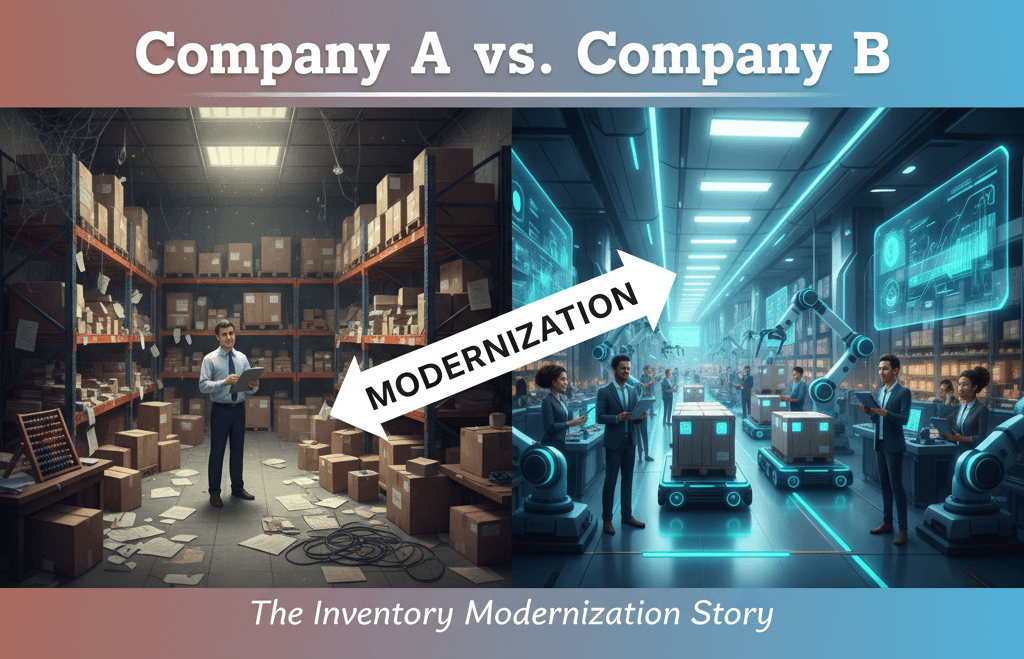
Spreadsheets are messy. ERPs are heavy.
Company A buys a huge ERP. Company B picks a lightweight AI platform.
Twelve months later, only one of them is celebrating.
Company A decides it’s time to get serious about inventory. They’ve outgrown spreadsheets, so they buy a massive ERP system to “handle everything.” Company B, on the other hand, selects a lightweight AI-powered inventory platform to automate tracking, forecasting, and ordering, without the ERP headaches.
Month 1:
Company A’s ERP project kicks off with excitement. Consultants are hired, data migration begins, and the team starts sitting through hours of training sessions.
Company B goes live with a simple AI-enabled pilot. It connects to their sales data and starts learning demand patterns right away.
Month 3:
Company A’s ERP still isn’t fully set up. The finance team is frustrated; the system requires six new approval steps just to record a purchase order. Meanwhile, operations are still updating spreadsheets “just until the ERP is ready.”
Company B’s pilot is already showing results. The AI alerts them when inventory levels are out of sync with forecasted demand and automatically recommends reorder quantities. The warehouse manager loves it.
Month 8:
Company A’s ERP rollout stalls. Customizations are costing more than expected, and none of the dashboards match what management actually wants to see. The team is juggling three systems: ERP, spreadsheets, and email.
Company B has expanded their AI system to include multi-location tracking and automated reordering. They’re saving hours every week and catching supply chain issues before they become costly.
Month 12:
Company A’s leadership holds a meeting: “This ERP doesn’t fit how we work.” They start looking for a simpler, smarter solution and call Company B to ask what they’re using.
Company B is fully operational, scaling comfortably, and using insights from their AI system to negotiate better supplier terms and manage working capital more effectively.
The difference?
Company A tried to replace spreadsheets with an ERP that replaced flexibility with friction. Company B designed for simplicity and scale from day one, choosing an AI-driven system that actually fits the business, instead of forcing the business to fit the software.
Sometimes smart decisions are about understanding how the world actually works instead of trying to make the world work in the way you want it to.