How to Improve Profit Margins Through Smarter Inventory Management
Boost your profits with smarter inventory management. Learn 5 essential strategies: strategic alignment, demand forecasting, accuracy, process optimization, and leveraging AI.
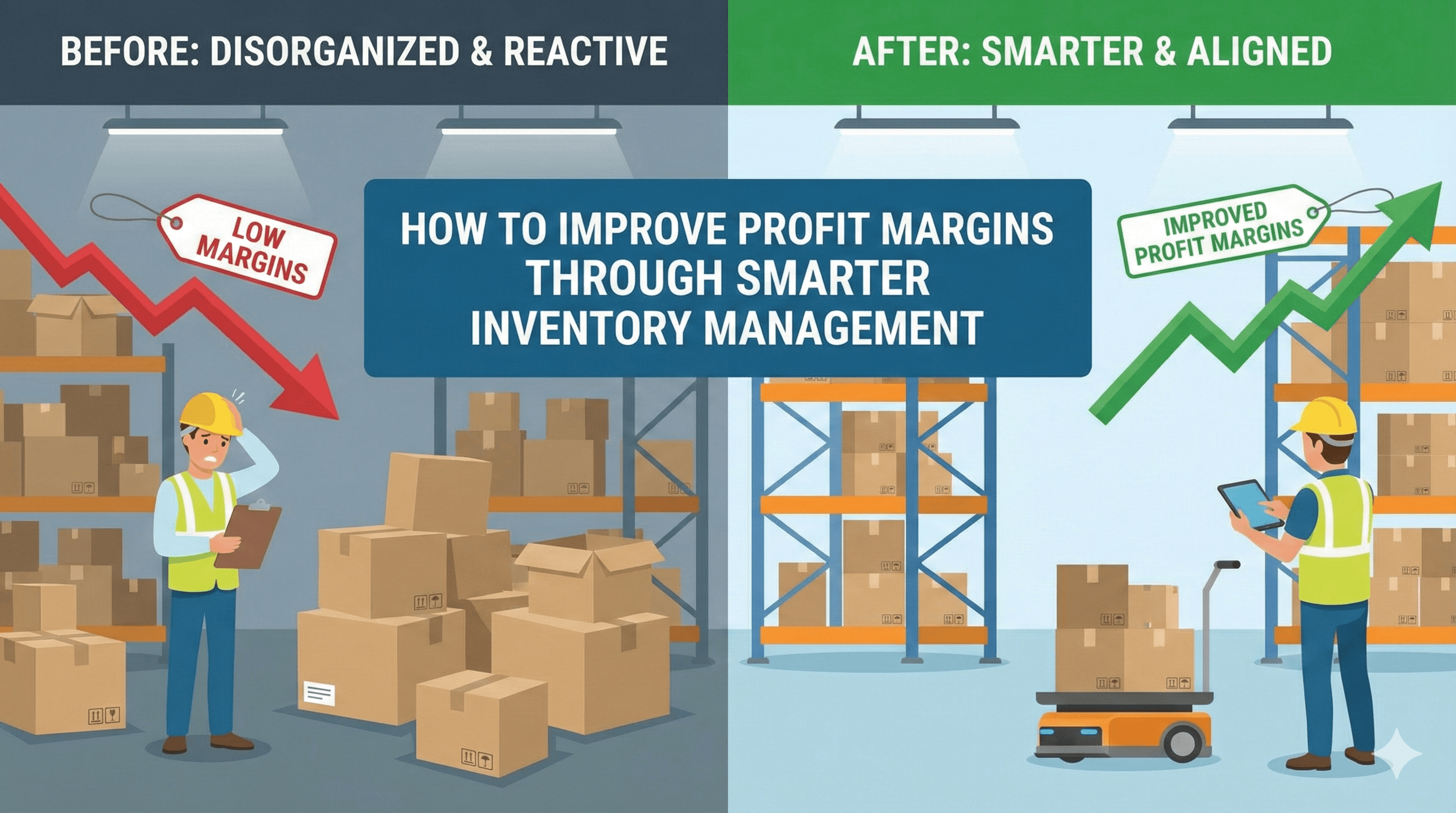
Every business dreams of improving profit margins, but few realize how much impact inventory management can have. From forecasting demand to optimizing warehouse layout, the way you handle stock can make the difference between lean profits and steady growth. A recent discussion on the r/InventoryManagement subreddit shed light on how professionals in the field are actually achieving these gains.
1. Think Strategically — Inventory Is a Business-Wide Function
Inventory management doesn’t operate in isolation. As one commenter put it, it’s all about precision planning. If your marketing team is preparing a campaign, inventory should anticipate that surge. Likewise, operations must adjust procurement and fulfillment accordingly.
The takeaway: Align marketing, operations, and inventory, not just for efficiency, but to create a synchronized rhythm that supports growth.
2. Understand What Drives Your Demand
Effective forecasting isn’t just about formulas. It’s about knowing why your customers buy. Seasonality, weather, promotions, and local events can all influence demand. When you understand these patterns, your forecasting models stop being guesses and start being grounded in reality.
3. Prioritize Accuracy Over Speed
Many businesses think “just-in-time” means cutting stock levels. But experts in the thread emphasized inventory accuracy over minimalism.
If your data isn’t right, your decisions won’t be either. High accuracy allows better forecasting, smoother operations, and stronger cash flow. And this accuracy doesn’t begin in the warehouse, it starts with coordinated sales and operations planning (S&OP).
4. Fix the Process Before the Math
Forecasting models matter, but they’re useless without a strong process. One company saw results by focusing on real usage data and reducing overstocking.
They improved warehouse flow by labeling clearly, using barcodes, and creating organized zones. Once the basics were in place, they layered in software that offered real-time inventory tracking across multiple sites, cutting down manual checks and errors.
5. Leverage AI and Continuous Learning
The future of inventory management is increasingly data-driven. AI-powered tools can analyze historical sales, weather data, and events to project demand automatically.
For example, one restaurant inventory system looks at a year’s worth of data, identifies correlations with external events, and predicts upcoming needs, saving hours of manual forecasting.
But even the best systems need human oversight. As one commenter wisely said, “It’s an art and a science.” Use technology to make better decisions, not to replace your judgment.
Conclusion
Whether you’re a small business or a multi-location enterprise, improving your margins through inventory management isn’t about any one tool or trick. It’s about alignment, accuracy, process, and learning.
Start by identifying your biggest friction points. Are you overstocked, inaccurate, or reactive? Fix one problem at a time, and let data and discipline do the rest.
Because when your inventory works in harmony with your business, your margins will too.