Part 1: The Wholesale Distributor's Guide to Supply Chain Resilience: 6 Strategies to Survive Disruptions (Part 1)
Part 1: Don't let supply chain disruptions cripple your business. Discover 6 essential strategies wholesale distributors are using to build resilience.
6-PART SERIES - PART 1
Reading time: 5 minutes
When Your Supplier Calls With Bad News
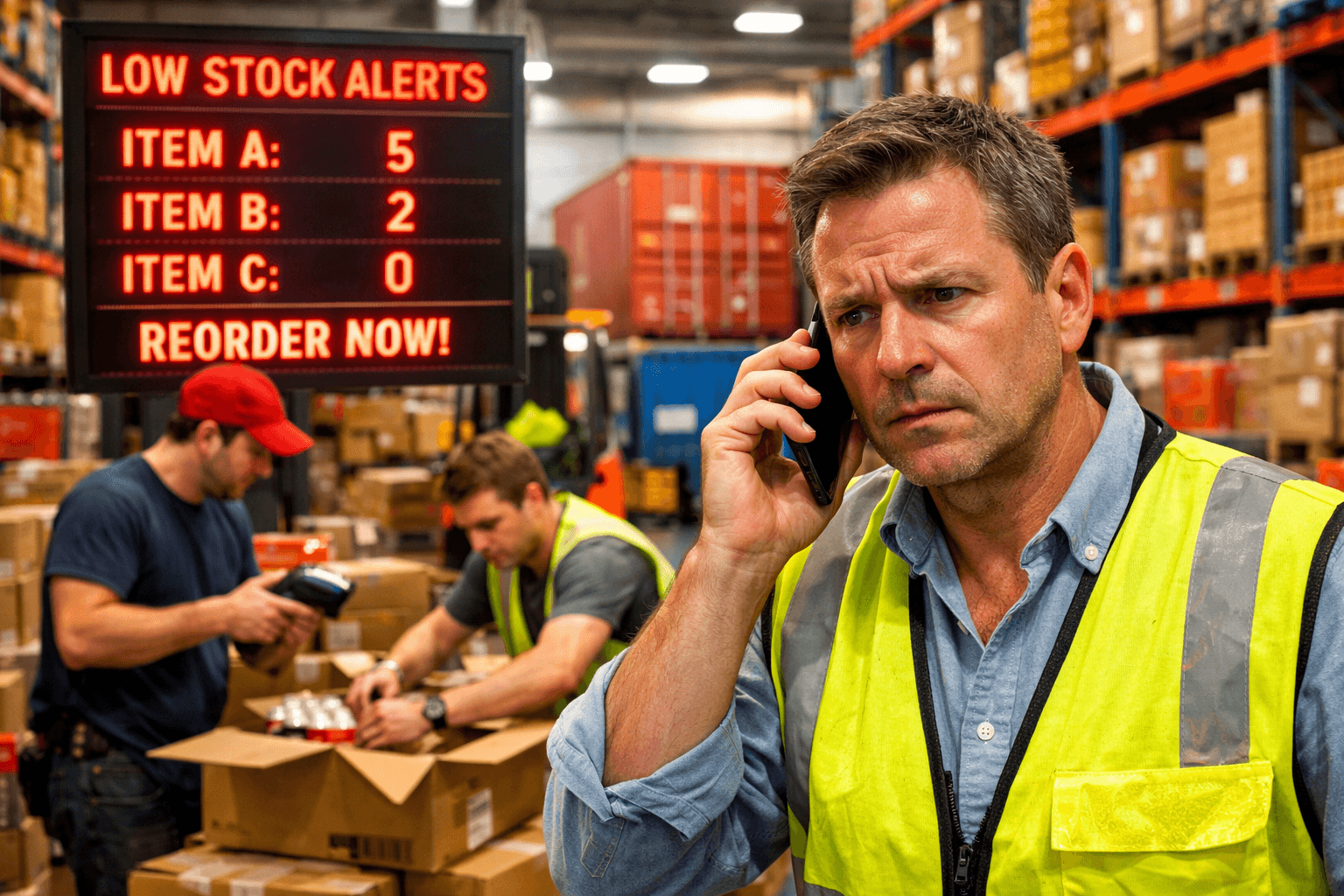
It's 9 AM on a Tuesday. Your phone rings. It's your #1 supplier.
"We're experiencing significant delays at the Port of Los Angeles. Your container won't arrive for another 6 weeks. Maybe 8."
You check your inventory. You have 12 days of stock left on your best-selling product. You have 47 customer orders pending. Your biggest customer expects their delivery in 10 days.
This is not a hypothetical scenario. This is Tuesday for wholesale distributors in 2026.
Supply chain disruptions used to be rare events. Port strikes. Natural disasters. The occasional factory fire.
Now they're constant:
- Port congestion (3-week delays normal)
- Shipping container shortages
- Supplier bankruptcies
- Raw material shortages
- Geopolitical trade restrictions
- Warehouse labor constraints
The question isn't "will your supply chain be disrupted?" It's "when will the next disruption hit, and will you survive it?"
The Real Cost of Supply Chain Disruptions
Before we dive into solutions, let's quantify what's at stake.
Real example:
A mid-sized industrial distributor ($15M annual revenue) faced a 6-week supplier delay on a critical product line that represented 20% of revenue.
The damage:
- Lost sales: $180,000 (6 weeks × $30K/week)
- 3 major customers switched to competitors
- Rush orders from alternate supplier: +$45,000 premium
- Management time: 120 hours firefighting
- Total cost: $225,000+ plus 3 lost customers
Could they have prevented this? Yes. With the right strategies in place.
The 6 Strategies for Supply Chain Resilience
We've analyzed dozens of distributors who survived recent supply chain crises while their competitors failed. Here are the 6 strategies they all had in common:
Strategy 1: Multi-Source Critical SKUs
The problem: Relying on one supplier for your top revenue products.
The solution: Implement a 70/30 split. Give 70% of volume to primary supplier (keep discounts), 30% to secondary supplier (maintain backup relationship).
When it matters: Your primary supplier has a factory fire, quality issues, or capacity constraints. Your secondary supplier is already qualified and can ramp to 100%.
Real impact: Electronics distributor avoided $2M revenue loss during Taiwan chip shortage by having alternate suppliers ready.
Strategy 2: Calculate Strategic Safety Stock
The problem: Either no safety stock (frequent stockouts) or massive safety stock (cash tied up in dead inventory).
The solution: Data-driven safety stock calculated per SKU based on demand variability, lead time variance, and service level targets.
When it matters: Supplier delays, demand spikes, or port congestion. Your safety stock covers you while you resolve the issue.
Real impact: Fastener distributor reduced inventory 27% while cutting stockouts 85% using calculated safety stock.
Strategy 3: Track Supplier Performance
The problem: You track price. Maybe lead time. That's it. You have no idea which suppliers are reliable until they fail.
The solution: Monthly supplier scorecards tracking on-time delivery, lead time variance, quality issues, and communication responsiveness.
When it matters: When you need to decide which suppliers to prioritize, which to give more volume, and which to replace.
Real impact: Plumbing distributor improved on-time delivery from 78% to 94% by tracking supplier performance and shifting volume to reliable partners.
Strategy 4: Build Strategic Inventory Buffers
The problem: Safety stock covers normal variance. But what about known future disruptions like announced port strikes or supplier shutdowns?
The solution: Strategic buffers beyond safety stock for anticipated disruptions. Monitor news, industry signals, supplier communications.
When it matters: Port strike announced 30 days out. Supplier announces factory maintenance. Seasonal demand spike approaching.
Real impact: Medical supply distributor built 4-month buffer before COVID-19 hit. Grew 400% while competitors had stockouts.
Strategy 5: Implement Real-Time Inventory Visibility
The problem: Your spreadsheet is 4 days old. Customer asks "do you have 500 units?" You say yes (based on outdated data). Warehouse says "we only have 120." Customer is angry.
The solution: Real-time inventory system showing actual on-hand, inbound inventory, and committed stock. Know your true Available-to-Promise (ATP).
When it matters: During disruptions, inventory changes rapidly. Real-time data lets you allocate scarce inventory, prioritize customers, and make informed decisions.
Real impact: During disruptions, 4-hour-old data is worthless. Real-time visibility is the difference between serving customers and losing them.
Strategy 6: Diversify Geographically
The problem: 80% of products from China. Port congestion, tariffs, COVID lockdowns, geopolitical risk. One country = concentrated risk.
The solution: 5-year plan to diversify sourcing across China (50%), Southeast Asia (20%), Mexico (15%), USA (10%), Other (5%).
When it matters: China-specific disruptions don't cripple your entire business. You have alternatives.
Real impact: Cost is 5-10% premium for some regions, but risk reduction is worth it.
Your 90-Day Supply Chain Resilience Plan
Don't try to implement all 6 strategies at once. Here's your roadmap:
Week 1-2: Assessment
- Identify top 20 SKUs by revenue (your critical items)
- Calculate current on-time delivery rate by supplier
- Determine how many days of inventory you have
Week 3-6: Quick Wins
- Build safety stock for top 10 SKUs
- Find alternate suppliers for top 5 single-sourced items
- Place test orders with alternates
Week 7-12: Infrastructure
- Implement supplier scorecards (track performance monthly)
- Set up inventory management software (if using spreadsheets)
- Configure real-time tracking and safety stock calculations
Month 4+: Ongoing
- Monthly supplier scorecard reviews
- Quarterly alternate supplier testing
- Annual supply chain audit
The Bottom Line
Supply chain disruptions are the new normal. Companies that prepare survive and thrive. Companies that react struggle and fail.
The investment? Smaller than you think:
- Multi-sourcing: often price neutral
- Safety stock: one-time cash outlay (self-funding)
- Supplier tracking: time investment with huge ROI
- Inventory software: $399/month (pays for itself in one prevented stockout)
The ROI? Survival during the next crisis. Growth while competitors fail.
Continue the Series
Next: How To Multi-Source Critical SKUS Without Losing Volume Discounts
Ready to Build Supply Chain Resilience?
AssetBlaze helps wholesale distributors:
- Track supplier performance automatically
- Calculate optimal safety stock per SKU
- See real-time available-to-promise across all locations
- Get alerts when POs are running late
- Make data-driven purchasing decisions
Over 2,500 distributors use AssetBlaze to survive supply chain disruptions.
Start Free → No credit card required. Setup in 5 minutes.