Inventory Management for Manufacturers in Bulgaria: What Foreign-Owned Operations Get Wrong
Discover the unique inventory challenges foreign-owned manufacturers in Bulgaria face and how to effectively solve them with a multilingual, real-time inventory system.
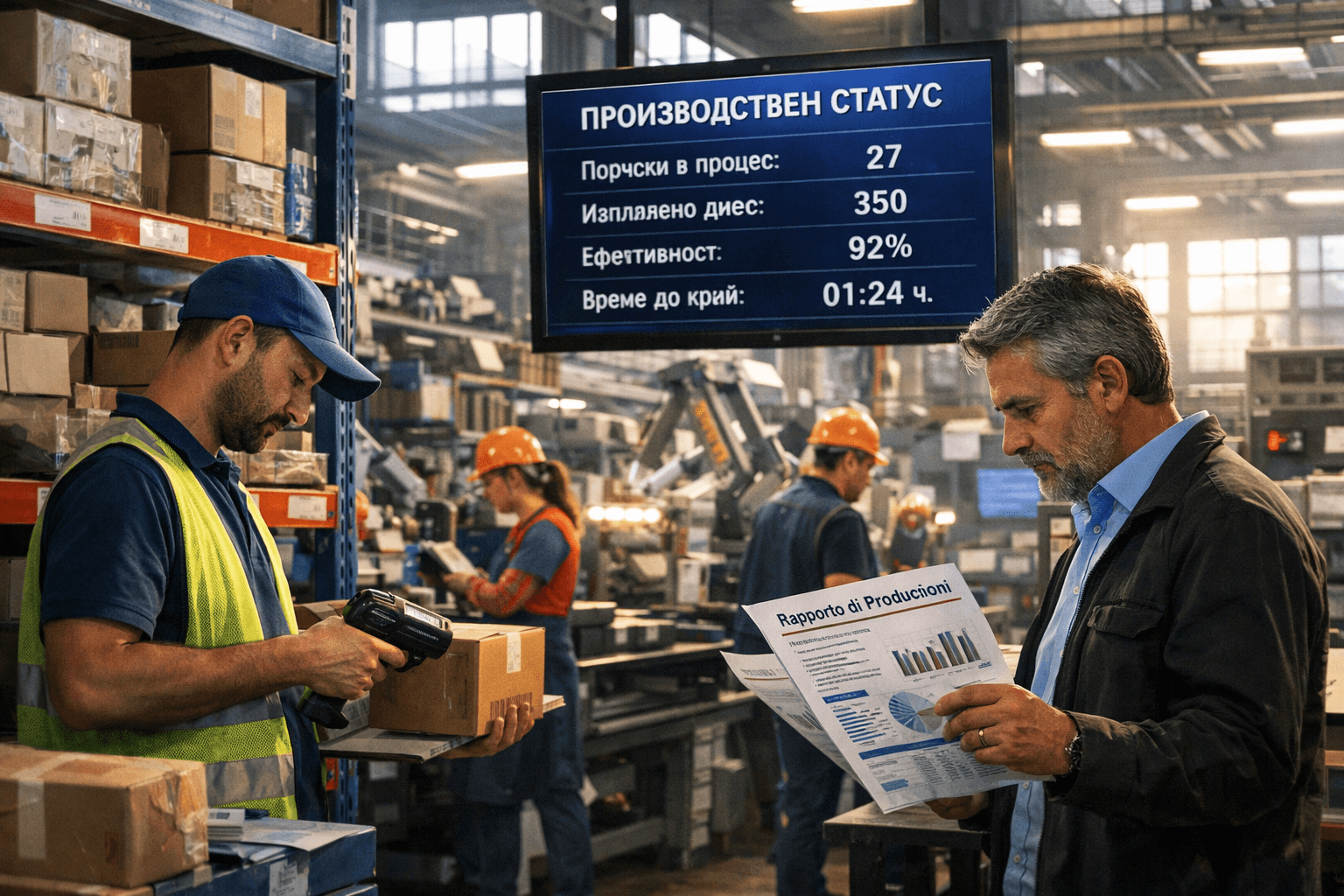
Inventory management for manufacturers in Bulgaria has a problem that most software vendors don't understand: the operation runs in Bulgarian, the reporting goes to headquarters in German or Italian or English, and the system connecting the two is usually a spreadsheet that one person knows how to maintain.
Bulgaria's manufacturing sector is growing for good reasons. Labour costs sit at roughly €10.60/hour versus a €33.50 EU average. Corporate tax is a flat 10%. EU single market access is built in. The country has become a nearshoring favourite for German, Austrian, and Italian manufacturers looking for cost-competitive European production.
But the same things that make Bulgaria attractive for manufacturing create specific inventory challenges that domestic software and enterprise ERPs handle badly.
Your Local Team Speaks Bulgarian. Your HQ Doesn't.
This is the gap nobody talks about in software evaluations. Your warehouse staff in Plovdiv or Dupnica work in Bulgarian. Your operations manager might work in Italian. Your CFO reads reports in English or German.
Most inventory systems support one language well and others poorly. The result is that your local team either struggles with an interface they can't read fluently, or your headquarters gets exported data that's been manually translated and reformatted. Both situations introduce errors. Both waste time. And when something goes wrong with a shipment or a stock count, the language barrier turns a five-minute clarification into a day-long email chain.
A manufacturer with operations in Bulgaria needs an inventory system where the warehouse team logs in and sees Bulgarian, the operations lead sees Italian or French, and headquarters sees the same real-time data in English. Same system, same numbers, different languages.
You Hired 15 People. You Can't Justify a €150K ERP.
Bulgaria attracts light manufacturing operations, not megafactories. The typical foreign-owned plant runs 15-80 people producing components, assembling products, or processing materials for European customers. The inventory is real, the complexity is real, but the budget is not SAP-sized.
Enterprise ERPs like SAP or NetSuite start well above what a 30-person manufacturing operation in Bulgaria should be spending on software. The implementation alone can take six months and require consultants who bill more per day than your local staff earn in a week. For a plant that needs to track raw materials in, finished goods out, and know what's on the shelf right now, that's overkill.
The alternative most companies choose is worse: spreadsheets, WhatsApp messages, and a production manager who keeps the real numbers in their head. This works until that person takes a holiday, leaves the company, or makes a mistake that costs more than a year of software would have.
The right fit is a system that handles real inventory complexity (purchase orders, supplier management, multi-location tracking, serial numbers) at a price point that makes sense for a mid-size manufacturing operation, not a multinational corporation.
Your Suppliers Are Spread Across the Region (And None of Them Are Predictable)
Bulgarian manufacturers source materials from across the Balkans, Turkey, Western Europe, and increasingly from Asia. Each supplier has different lead times, minimum order quantities, and reliability.
Industry data shows that 72% of businesses face significant lead time variability from their suppliers. For manufacturers in Bulgaria, this is compounded by customs processing (for non-EU sources), inconsistent freight schedules, and suppliers who occasionally ship short without warning.
Without supplier performance data in your inventory system, you can't objectively compare which suppliers deliver on time and which ones cost you production delays. You can't calculate whether the cheaper Turkish supplier actually saves money once you factor in the late deliveries and short shipments. Every reorder decision is based on the last thing someone remembers, not on data.
Staff Turnover Means Your Inventory Knowledge Walks Out the Door
Bulgaria's manufacturing sector faces a well-documented workforce challenge. Rising wages (15-20% year-over-year increases in automotive and electronics), an ageing population, and competition from higher-paying service sector jobs mean turnover is a constant reality.
When inventory knowledge lives in one person's head, and that person leaves, the operation loses more than an employee. It loses the understanding of where things are stored, which suppliers need to be chased, what the reorder points should be, and which SKUs have been sitting untouched for six months.
A proper inventory system makes this knowledge institutional instead of personal. New staff can log in and see exactly what's in stock, what's on order, what's running low, and what the supplier history looks like. The ramp-up time for a replacement goes from weeks to days.
Production Schedules Don't Match Stock Reality
In light manufacturing, production planning depends on knowing what raw materials and components are available right now, not what the spreadsheet said yesterday morning. When your bill of materials calls for 500 units of a component and your system says you have 480 but the actual count is 320, your production line stops.
The average inventory accuracy across businesses is roughly 83%. For a manufacturer running tight production schedules with imported materials on long lead times, that 17% error rate doesn't just cause inconvenience. It causes missed delivery dates, emergency air freight from suppliers, and customers who start looking for a more reliable source.
Real-time inventory tracking, where every receipt, every consumption, every adjustment is reflected immediately, is the difference between a production schedule you can trust and one you have to constantly verify by walking the floor.
What Manufacturers in Bulgaria Actually Need
The pattern across all five problems is the same: disconnected, manual, single-language systems that don't match how foreign-owned manufacturing operations in Bulgaria actually work.
What works is an inventory management system that runs natively in multiple languages (so your Bulgarian team and your European headquarters see the same data in their own language), sets up in hours not months (because you need to be operational, not managing an ERP implementation project), tracks inventory in real time across locations, connects purchase orders to stock levels so reordering happens from data instead of memory, and costs what a mid-size manufacturer can justify, not what an enterprise ERP vendor wants to charge.
AssetBlaze is built for exactly this. Purpose-built for light manufacturers, wholesale distributors, and importers. Multilingual (English, Bulgarian, French, Italian, German Czech & Greek), 24-hour setup, integrated purchase orders and supplier management, AI-powered forecasting, and real-time tracking across locations. $449/month flat, no per-user charges.
Next step: See the full feature set on our Inventory Management for Light Manufacturers page, or start free today.